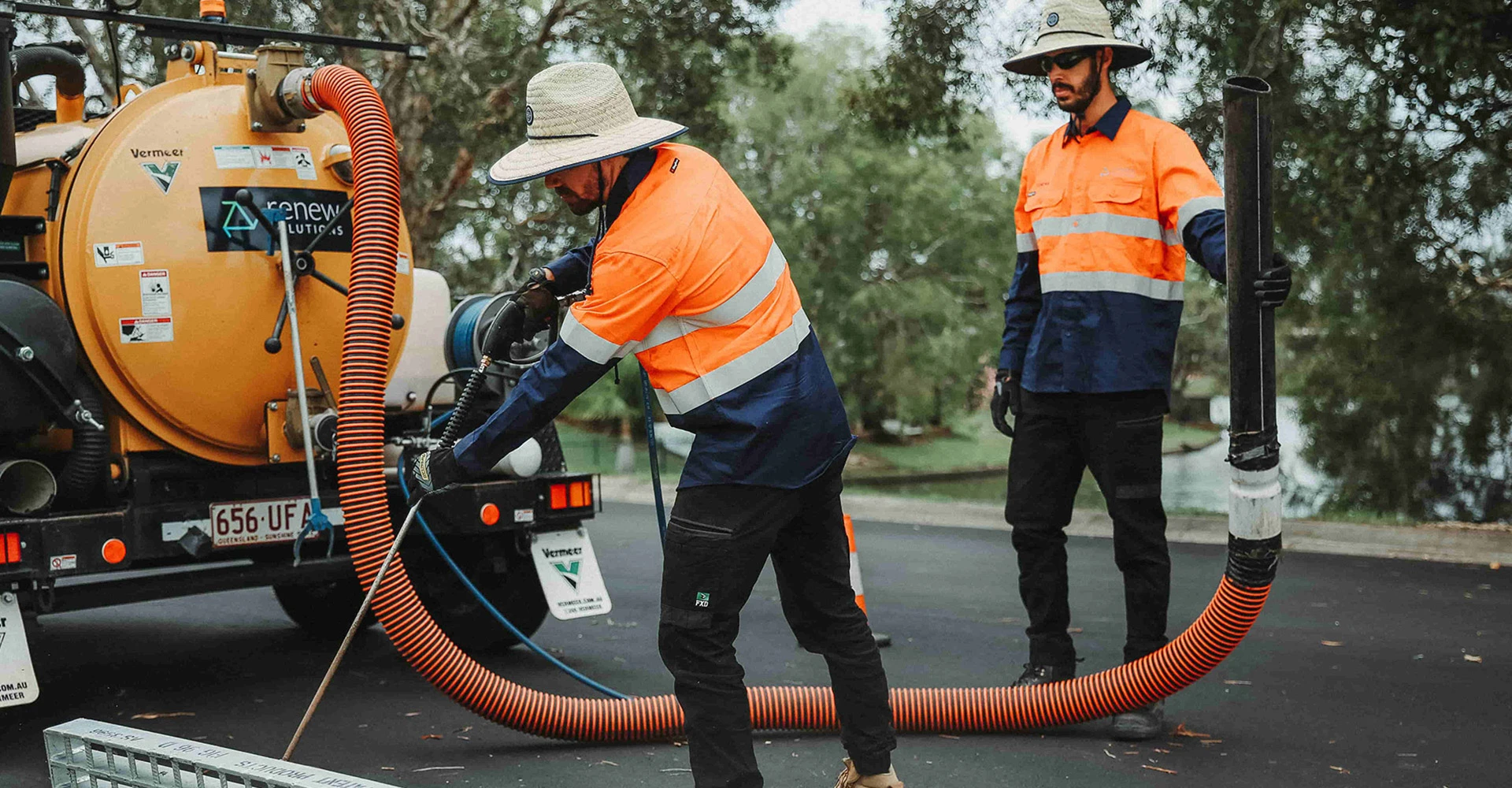
Seven controls, applied to every asset.
Site Establishment & Access
Hardstand access, bollard keys, exclusion fencing and site layout — scheduled around low-traffic windows.
Traffic & Pedestrian Management
Traffic management plans and permits, with exclusion zones to keep the public clear of open assets.
Plant & Equipment
A resource-allocation table matches the right vacuum trucks, crane trucks and crew to the asset — QEST-resourced.
Tidal & Environmental Influence
Tidal submergence and backflow assessed per site; works timed to the low-tide window for safe entry.
WHS Obligations
Site-specific SWMS/SOP, confined-space entry permits, gas detection, and fall-arrest for open-edge works.
Environmental Obligations
A site-specific Environmental Management Plan governs containment, disposal and waterway protection.
Cleaning Methodology
The step-by-step cleaning sequence — arrival, isolation, cover removal, vacuum extraction of sediment and pollutants, screen/basket servicing, reinstatement and demobilisation — captured and reported against, so Council sees the work that was done.
Appel Park CDS3018 — a tidal GPT clean.
Two service profiles, real site scenarios.
SP1 covers standard GPT cleaning; SP2 covers specialist assets — grease traps and onsite treatment facilities. Each has its own documented method.
John Laws Park
Tidal (Seaway 0.32 m), no penstock valve. Removable bag 100% full, 550 mm sediment. Night works, 10 carparks cordoned.
Appel Park
Outlet permanently submerged into Nerang River, tide-gate valve. Basket 75% full, 400 mm sediment. Crane-truck access.
Broad Street / Marine Parade
Standard GPT cleaning method with site-specific access, traffic, WHS and environmental controls.
Pratten Park
Specialist cleaning method for a park BBQ grease trap, with containment and disposal controls.
Arthur Earle Park
Septic onsite-treatment-facility servicing with confined-space and environmental protocols.
Every Greater Geelong asset would receive its own site-specific method statement before works — consistent, safe and auditable.